
McLeod Jail Release Destinations
A McLeod County Jail booking can end in more than one way. A person may walk into the jail lobby after posting bond, receiving a court order, or completing a local sentence. The person may instead leave in another agency’s custody. Transfers can go to the Minnesota Department of Corrections, another jail, a treatment placement, federal custody, immigration custody, or another lawful custodian. A transfer ends the McLeod booking, but it is not release to the community.
The most useful county record identifies the date, time, and legal basis of release. If custody moved, Minnesota law also makes the transfer date, time, legal basis, and recipient agency public arrest data. Those fields solve the main problem with the live roster: once a name drops off, the roster does not preserve the reason. The receiving-agency field tells the reader which system to search next.
Confirm a McLeod Jail Release
The official McLeod In Custody List gateway is a present-status tool. An entry confirms that the sheriff listed the person at the roster timestamp. An absent entry is only a reason to keep checking. Minnesota VINE receives county-jail custody events, while the sheriff’s written record supplies the strongest historical proof of the county booking’s end.
- Check the current roster and compare the person’s name, age, MNI, booking number, photograph, and intake date.
- If the name is absent, search Minnesota VINE by name or facility ID and read whether the event says release, transfer, escape, or death.
- Call the jail when current status matters. Ask whether the person left for the community or another authority.
- Review the McLeod court file for the order, sentence, bond event, dismissal, or other legal context.
- Request the actual release or transfer fields in writing when a dated agency record is needed.
A court order may authorize release before jail processing ends. VINE can report a custody change without supplying every legal detail. For a broader named-person workflow, the McLeod County released inmate search explains how the county, court, DOC, and federal paths fit together.
McLeod Jail Release Records
McLeod County requires sheriff records requests in writing. The records request page links to an online form and a printable form. A focused request should give the full name, a second identifier, the approximate booking dates, and the booking or court number when known. Ask for the intake time, actual release date and time, legal basis, release disposition, and recipient authority if transferred. Ask for inspection, copies, or both.
801 10th Street East
Glencoe, MN 55336
Jail: 320-864-5191, staffed 24 hours
Records: McLeod.SheriffRecords@co.mcleod.mn.us
Lobby and reports service: Monday–Friday, 8:00 a.m.–4:30 p.m., excluding holidays
Inspection of public data is free under Minnesota Statutes section 13.03. No release-record or booking-photo fee is posted, so request an estimate before authorizing copies. The county promises a response as soon as reasonably possible, not a fixed number of days. Ask for existing data rather than demanding a newly created release list.
McLeod Jail Custody Scope
The McLeod County Sheriff’s Office operates the county’s licensed Class III jail at the Law Enforcement Center in Glencoe. It holds adult men and women. Its population includes people awaiting court, people serving straight-time local sentences, work-release participants, and Sentence to Service participants. It is the only detention facility physically in McLeod County verified by the official-source review.
City police departments in Brownton, Glencoe, Hutchinson, and Winsted were not identified as operators of separate lockups. A city arrest should be traced through the arresting agency, McLeod Jail, Minnesota VINE, and the court case. Creating a municipal-jail search route would send the reader to a system the county does not document.
McLeod Jail Release Timing
The county’s intake and release instructions separate sentenced releases from court-driven releases. Sentenced inmates are generally released at 7:30 a.m. to the jail lobby. Court information may not reach the jail until about 1:30 p.m. at the earliest. Processing can then take one to four hours, depending in part on the calendar and when the matter was heard.
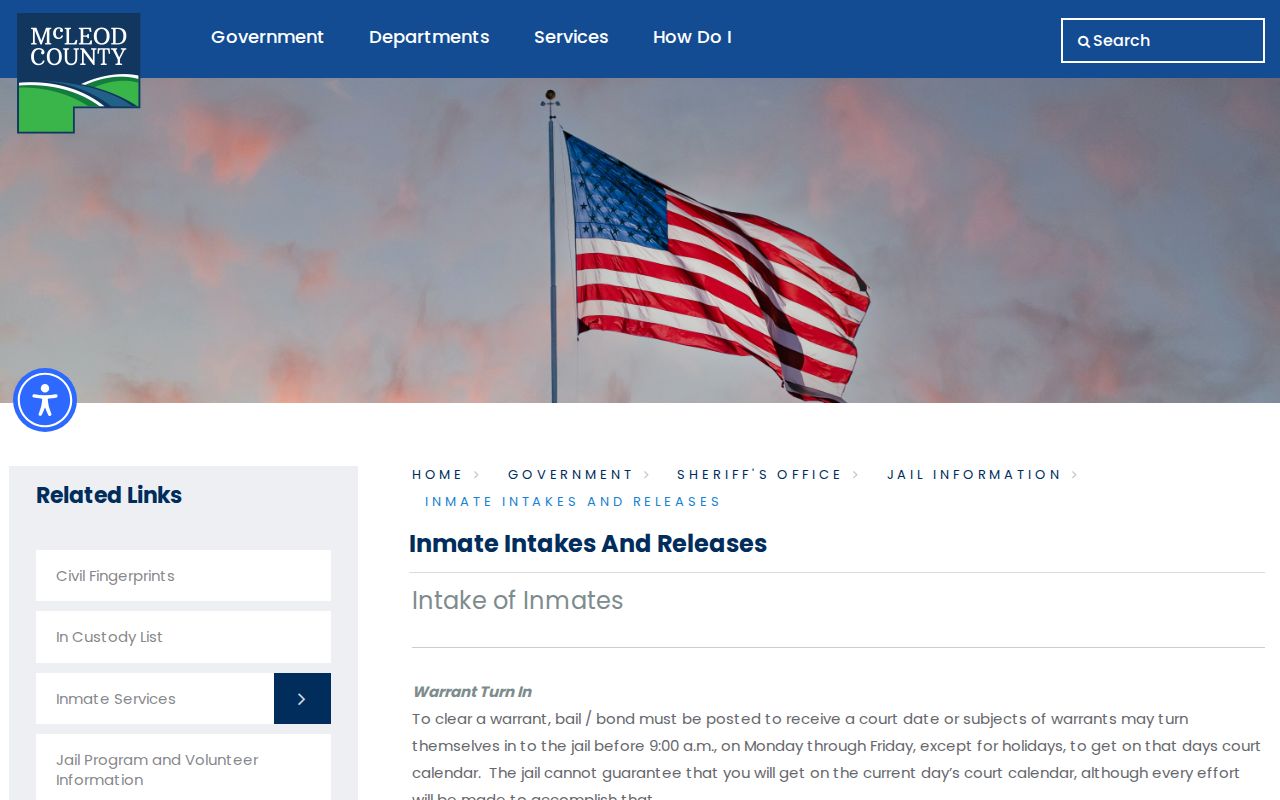
The county instructions show why a favorable hearing and a physical exit can have different times. A court entry explains legal authority. The sheriff’s release timestamp confirms when the McLeod County Jail booking actually ended.
Note: A future release note on the current roster remains prospective until the jail records the person’s actual exit or transfer.
McLeod Jail History and Expansion
McLeod County Jail opened in 1982 on the second floor of the Law Enforcement Addition. A 2018 project added 19 detention beds, enlarged the intake area, and supplied video visitation and office space. The current 59-bed figure is supported by both the county jail information page and the state’s 2025 facility inspection. This local history is part of the facility’s official record, not a directory estimate.
The expanded intake area matters to release research because booking and discharge are operating events managed by the jail. The live roster displays a changing custody population, not a permanent release archive. The sheriff records route remains the correct place to request retained release and transfer fields after the public entry disappears.
After a McLeod Jail Release
The jail lobby is the documented physical exit point. Staff can provide bus-route information on request. Released people may receive or buy Trailblazer or Metro Transit tokens, and cab companies serve the jail. A community-resource packet is also available. These are options, not a promise of transportation.
The county applies an added safety rule when a person is intoxicated, affected by drugs, or vulnerable due to mental-health concerns. Release occurs only to a responsible adult who is sober and shows a valid driver’s license. That condition can delay an expected exit even after the underlying legal basis has been resolved.
The property and clothing instructions address property released while a person is still detained. The detained person must make a written request, and the collector must show government-issued photo identification with a date of birth.
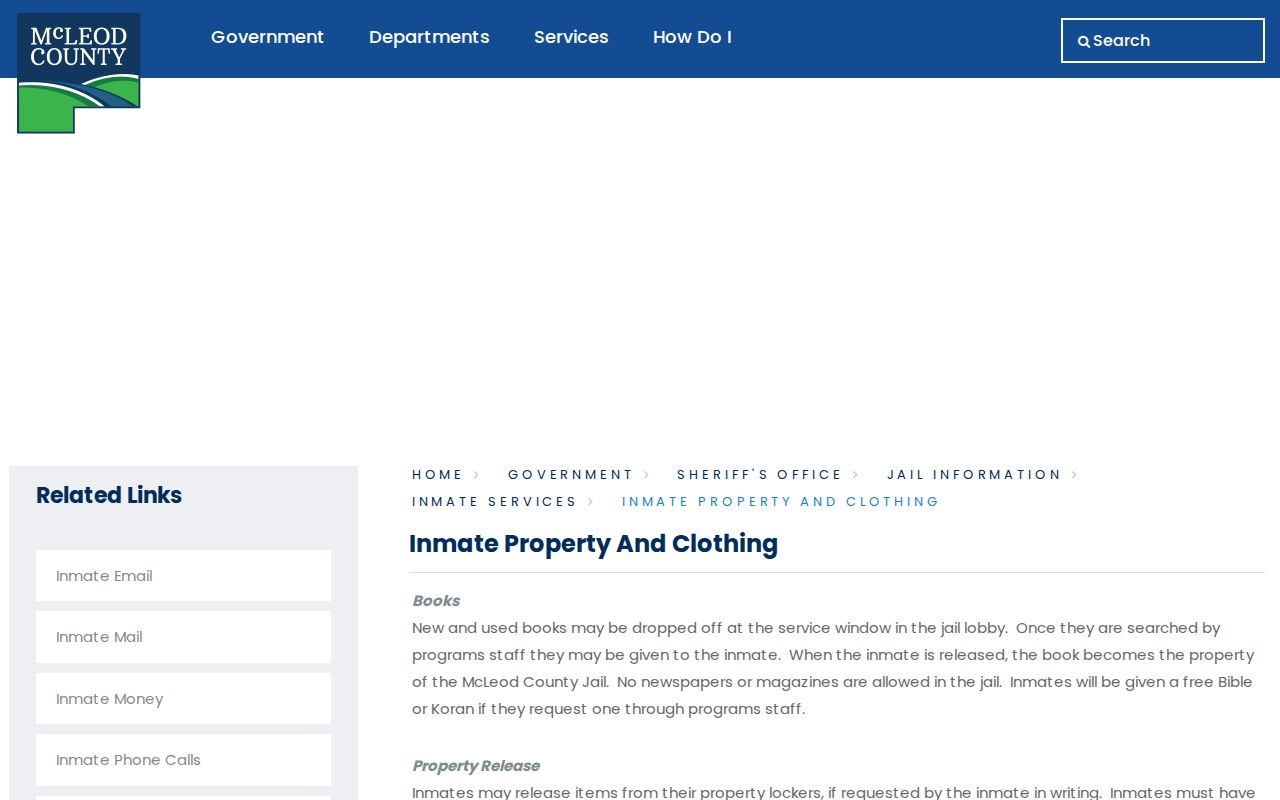
The property page does not state that the same process governs final discharge. Call the jail about property at the time of release instead of extending the detained-person rule beyond its source.
Read McLeod Jail Release Fields
A complete county response should make identity, time, reason, and destination easy to separate. The booking or MNI number connects the answer to the correct jail event. Intake date and time distinguish repeat bookings. Actual release date and time record the end of that booking. The legal basis explains whether bond, a court order, sentence completion, or another authority caused the change.
| Requested field | Why it matters |
|---|---|
| Booking and MNI numbers | Match the record to the right person and jail stay. |
| Actual release date and time | Establish when McLeod custody ended. |
| Release legal basis | Distinguish bond, court action, time served, and other reasons. |
| Transfer date and time | Show when custody moved instead of ending. |
| Recipient agency | Identify the next system that must be checked. |
A release timestamp alone does not end the criminal case, prove the charge result, or rule out supervision. Pair it with the McLeod court register when legal context matters. If the record says transfer, search the named recipient rather than treating the timestamp as a community exit.
McLeod Jail Roster Release Limits
The live In Custody List can show a booking photograph, MNI, name, sex, age, booking number, intake date, charges, bail or bond, and free-text notes. Some current entries can display a future Release Date, “Release to Another Authority,” or “Release when Sober.” These are operational notes attached to current custody. They do not form a released-person archive.
McLeod County publishes no official 24-hour or 72-hour release window, no stated roster refresh interval, and no public post-release retention period. Once the entry leaves the current list, the visible context may vanish. Minnesota VINE can add a county-fed custody event, but an alert must be read for its exact type. Release, transfer, escape, and death are different events.
The court record then supplies the legal process. It can show bail, dismissal, sentence, jail credit, warrant activity, or a discharge entry. It does not sense the jail door. The sheriff’s actual release or transfer fields remain the best proof of how and when the McLeod County Jail booking ended.